9 Encouraging Bible Verses for New Believers (KJV)
Nine KJV verses for new Christians: how you are saved, how to handle sin, fear and hard days, with the context each verse is usually quoted without.
BIBLE VERSES

Nine verses for your first months of faith
If you have just put your trust in Jesus, these nine verses answer the questions most new believers ask first: Am I really saved? What do I do when I sin again? Where is God when life is hard? Each one is given in the King James Version, with the context it is usually quoted without.
1. Romans 10:9 — what saves you
“That if thou shalt confess with thy mouth the Lord Jesus, and shalt believe in thine heart that God hath raised him from the dead, thou shalt be saved.” (Romans 10:9, KJV)
“Lord” here is the Greek kyrios, the word the Greek Old Testament used for God’s own name. Saying “Jesus is Lord” was the first Christian confession (1 Corinthians 12:3). It is not a magic sentence; the next verse says belief begins in the heart and the mouth follows.
2. John 3:16 — why God sent His Son
“For God so loved the world, that he gave his only begotten Son, that whosoever believeth in him should not perish, but have everlasting life.” (John 3:16, KJV)
Jesus spoke these words to Nicodemus, a respected teacher who came to Him by night with questions. If you still have questions, you are in good company. The promise is to “whosoever,” which includes you.
3. Philippians 4:13 — strength for every season
“I can do all things through Christ which strengtheneth me.” (Philippians 4:13, KJV)
Paul wrote this from prison. Two verses earlier he says he has learned to be content both hungry and full (4:11–12). “All things” means every circumstance, plenty or need, not every goal you set yourself.
4. Jeremiah 29:11 — a hope that may take time
“For I know the thoughts that I think toward you, saith the LORD, thoughts of peace, and not of evil, to give you an expected end.” (Jeremiah 29:11, KJV)
God sent this to Jews in exile in Babylon, and verse 10 sets the timing: “after seventy years.” Its comfort is real, but it is a promise for the long road, not a guarantee of quick relief.
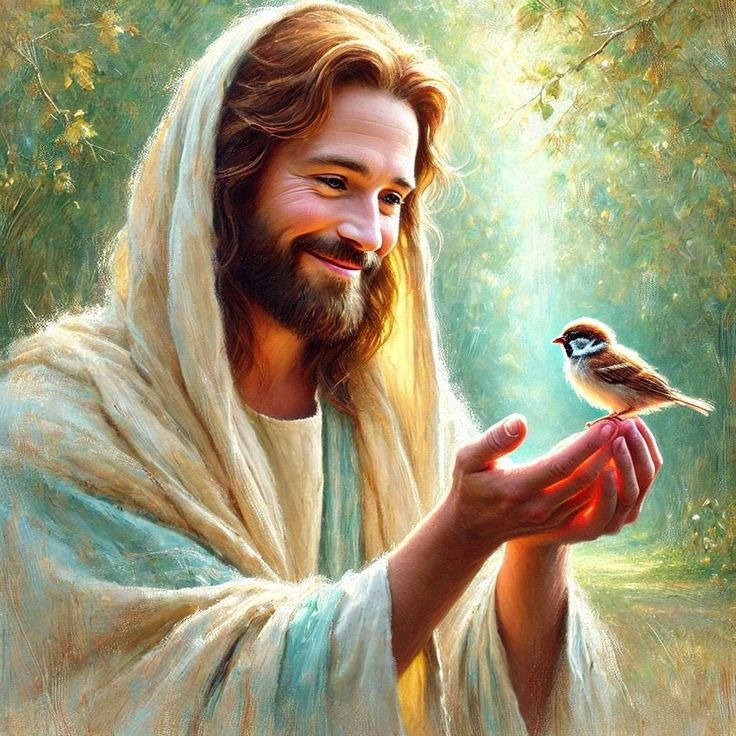

Jeremiah 29:11 — a promise to exiles
5. 1 John 1:9 — when you sin again
“If we confess our sins, he is faithful and just to forgive us our sins, and to cleanse us from all unrighteousness.” (1 John 1:9, KJV)
You will sin again; verse 8 says denying it is self-deception. “Confess” is the Greek homologeō, literally “to say the same thing”: you agree with God about what you did. Forgiveness rests on His faithfulness, not on how sorry you feel.
6. Isaiah 41:10 — when you are afraid
“Fear thou not; for I am with thee: be not dismayed; for I am thy God: I will strengthen thee; yea, I will help thee; yea, I will uphold thee with the right hand of my righteousness.” (Isaiah 41:10, KJV)
This verse is often quoted as “my righteous right hand,” but the KJV reads “the right hand of my righteousness.” The five promises stack up: I am with thee, I am thy God, I will strengthen, help and uphold thee.
7. 2 Corinthians 5:17 — who you are now
“Therefore if any man be in Christ, he is a new creature: old things are passed away; behold, all things are become new.” (2 Corinthians 5:17, KJV)
The Greek word behind “creature” is ktisis, the word for creation itself. Paul does not mean a new leaf but a new creation, God’s work, not yours.
8. John 14:27 — peace that does not depend on the day
“Peace I leave with you, my peace I give unto you: not as the world giveth, give I unto you. Let not your heart be troubled, neither let it be afraid.” (John 14:27, KJV)
Jesus said this on the night before His crucifixion, to friends who were about to see everything go wrong. His peace was given for a frightening week, not a calm one.
9. Romans 8:28 — what the good is
“And we know that all things work together for good to them that love God, to them who are the called according to his purpose.” (Romans 8:28, KJV)
This verse does not say all things are good. Verse 29 names the good God is working toward: that we be “conformed to the image of his Son.” Losses still hurt, but none of them is wasted.
Start with one verse this week
Do not try to memorise all nine at once. Pick the one that answers your question today, write it on a card and read it every morning for seven days. Then read its whole chapter.
Frequently asked questions
What is the first book of the Bible a new Christian should read?
Many pastors suggest the Gospel of John, written “that ye might believe” (John 20:31), followed by Acts and Romans.
How do I know I am really saved?
1 John 5:13 was written “that ye may know that ye have eternal life.” Assurance rests on God’s promise to those who believe, not on a feeling.
Do Christians still sin after being saved?
Yes. 1 John 1:8 says denying it is self-deception; 1 John 1:9 gives the remedy: confess, and God forgives and cleanses.
Does Philippians 4:13 mean I can do anything I want?
No. Paul is speaking of contentment in hunger and plenty (Philippians 4:11–12). Christ gives strength to face every circumstance.
Was Jeremiah 29:11 written to Christians?
It was written to Jews exiled in Babylon, with a seventy-year wait (Jeremiah 29:10). Christians read it as showing God’s faithful character.
Should a new believer be baptized?
In Acts, people who believed were baptized soon after (Acts 2:41). Ask your local church how they teach and practise baptism.
Follow
JesusTruePath
Plain answers to Bible questions, from the King James Bible.
© 2026 JesusTruePath. Scripture quotations are from the King James Version.